Isn't that also what yields human society cycles ? generations cannot explain their learning well enough, at best the authority lives in inertia for a while and then it evaporates. All new generation misinterpret the past, and the problems reappear.
I have a rule that any commit which changes the implementation has to include the documentation update at the same time.
Most of these documentation updates are a sentence or two, or maybe a paragraph. The overhead of incremental documentation updates like that is tiny enough that I don't really think about assigning extra time for them.
2020s ai could be the first systemic stall I see. Let's assume agentic could really be a force for improvement but the cost model is unsustainable and will choke.
Kept a few mini portable CRTs. I don't have any CRT monitors though.. sold my beloved diamondtron to a movie editor, sadly transporter probably shook it too hard and the device wasn't operating on arrival (at to refund the guy and lose the screen, double whammy)
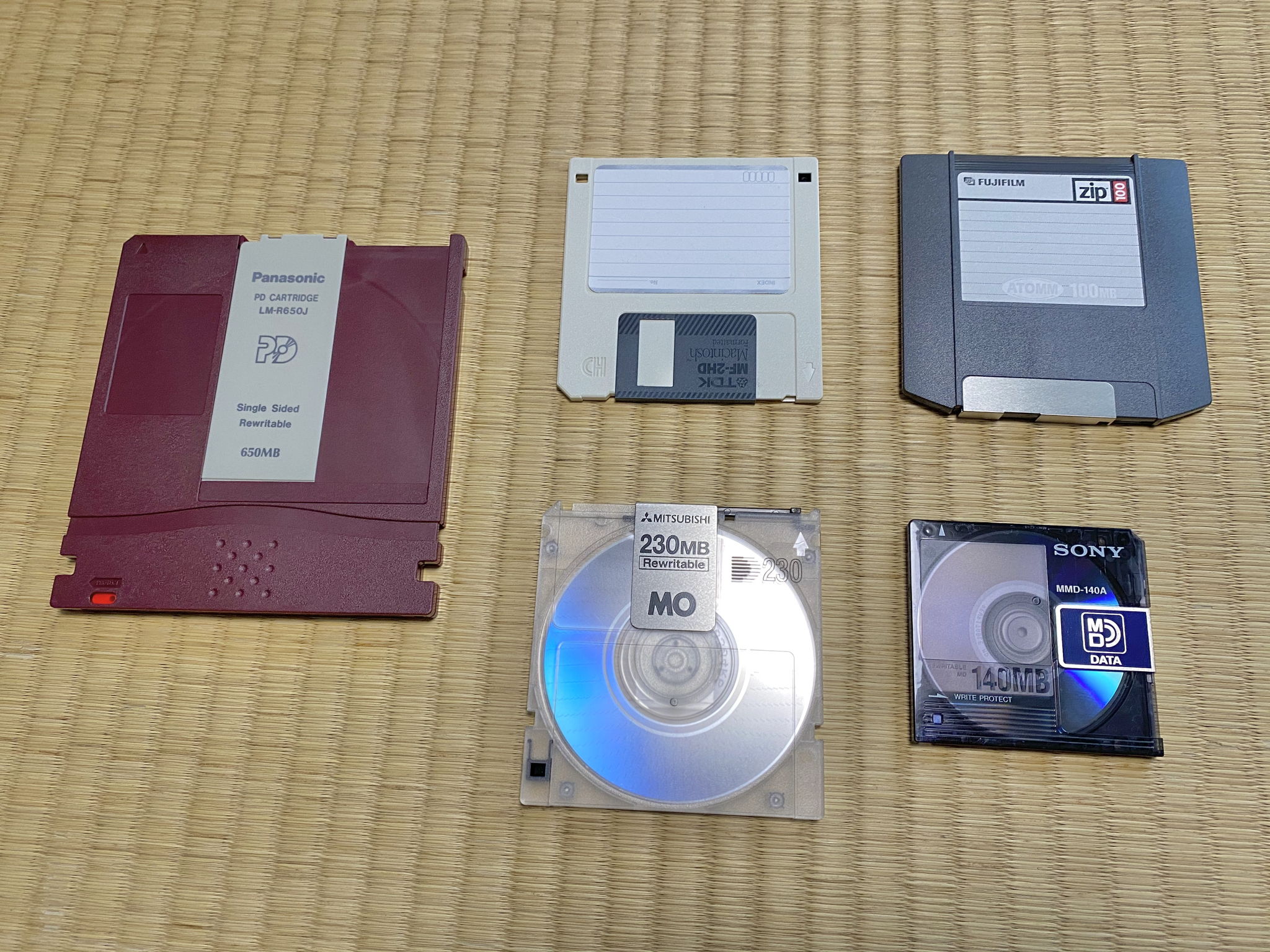
What I never got was why MD were never pushed as main rw disc drives on PC. IIRC Rewritable MDs were mainstream long before CD-R and it would have filled an immense need to replace floppy disks at the time (I love vintage and nostalgia, but floppies had way too much io errors, and the speed was.. not really there).
Maybe there were real technical reasons why data MD drives never caught up (too much cpu power required to handle the data ?) ..
What I had always wanted was a drive that played both music Minidiscs and MD data discs so I could also use the discs for both. At least I don't think there were any dual-use decks or recorders, and I couldn't justify getting a data drive when I already had a recorder. Back in the 90s I always assumed that was because Sony was paranoid about piracy; I even had to buy some kind of device so I could record digital audio from my computer directly onto audio MDs. (If I recall correctly, it's been a while!)
The better bet was MO (Magneto-Optical) which used the same underlying technology but has a disk standard that wasn't proprietary to Sony. MO was big in Japan (bigger than Zip disk) but never seemed to get much traction in the west. NeXT used the 5.25" version of MO as the main storage for their machines, but it was the later 3.5" version that was more popular.
There was an MD Data variant, and you could buy PC drives for it. It didn't last very long.
The technical reason why MD Data never caught on is the same reason why Iomega Zip and all the other superfloppy formats failed: none of them beat the CD on storage density and media cost. By the time the market actually needed a successor to 1.44MB floppies, everyone also had internal hard drives, so a lot of the use of the floppy drive was to install software. The fact that CDs couldn't be written to (yet) didn't matter. The fact that they held 650MB made them mandatory equipment, while every other rewritable medium was just a luxury for professional users working with a lot of data. And CD-Rs and RWs killed that last niche, too, even though they were less convenient[0] than superfloppies were.
[0] Writable optical media is a bit of a hack, necessitating processes like "mastering" and "finalization" to try and make the writable disc look like a regular disc to drives and players that aren't aware of the rewriting process.
> The technical reason why MD Data never caught on is the same reason why Iomega Zip and all the other superfloppy formats failed
I wouldn't say Zip didn't catch on, there were a few years where Zip drives were pretty ubiquitous. MD Data had a price problem. The drives were expensive ($500+) and the disks were nearly $30 IIRC. Meanwhile a Zip drives and disks were half that or less.
On the whole they just did not offer enough storage over competitors to justify their price. When CD writers got cheap they were better in almost every way.
Yes, even if Sony had competed the window of relevance was short. But they were always attached to premium pricing, without the product focus Apple later developed.
Sony's always had a very weird obsession with proprietary storage media. I think they resent the licensing model of CD-ROMs (essentially none) and desperately wanted formats they owned and could license out. At the same time their entertainment division would want to hamstring those formats with onerous limitations or DRM.
The end result was Sony always seemed so schizophrenic with storage formats. They'd come out with a format that looked cool on paper but then have some artificial limitation (including stupid prices) that made it unattractive.
It looks dumb because it didn’t work out, but in some alternate universe Sony has more money than Apple and Microsoft combined thanks to a monopolised data format.
It wasn’t just bad luck, it was a failed strategy all along when the tech industry was growing exponentially. That open, cheaper alternatives would undercut them was/is a given.
You could get them, although I've never seen one. I know someone who had a MD data drive on his PC which he used for copying large audio files onto (he had a multitrack recorder that also used them) with the handy advantage that they had considerably more capacity than Zip disks.
Apparently they were reliable but godawful slow, and he was glad to move onto SmartMedia and CompactFlash cards.
Minidiscs had a data capacity of around 150MB, IIRC. By that point Zip drives were already very common so you'd need a compelling reason for MD and I just don't think one was there.
I had a minidisc but never knew the actual MB capacity. Just you can get a CD on there. Id guess 100Mb? But the Zip drive also competed well in the space, I had one of those too!


reply