Honestly I didn't even realize Bing hasn't yet been rebranded as Copilot. And honestly who needs a "search engine" anymore when you can just ask Friend Copilot?
DNS naming rules for non-Unicode are letters, numbers, and hyphens only, and the hyphens can't start or stop the domain. Unicode is implemented on top of that through punycode. It's possible a series of bugs would allow you to punycode some sort of injection character through into something but it would require a chain of faulty software. Not an impossibly long chain of faulty software by any means, but a chain rather than just a single vulnerability. Punycode encoders are supposed leave ASCII characters as ASCII characters, which means ASCII characters illegal in DNS can't be made legal by punycoding them legally. I checked the spec and I don't see anything for a decoder rejecting something that jams one in, but I also can't tell if it's even possible to encode a normal ASCII character; it's a very complicated spec. Things that receive that domain ought to reject it, if it is possible to encode it. And then it still has to end up somewhere vulnerable after that.
Rules are just rules. You can put things in a domain name which don't work as hostnames. Really the only place this is enforced by policy is at the public registrar level. Only place I've run into it at the code level is in a SCADA platform blocking a CNAME record (which followed "legal" hostname rules) pointing to something which didn't. The platform uses jython / python2 as its scripting layer; it's java; it's a special real-time java: plenty of places to look for what goes wrong, I didn't bother.
People should know that they should treat the contents of their logs as unsanitized data... right? A decade ago I actually looked at this in the context of a (commercial) passive DNS, and it appeared that most of the stuff which wasn't a "valid" hostname was filtered before it went to the customers.
Great article with lots of practical ways to implement it. In my view this is a superpower and I find I can usually do it if I'm not stressed or tired.
As follow-up thoughts:
- It's important whom you listen to. Consider it a gift you're giving and give it only to those who you think deserve and not abuse it or make you consistently feel bad about something.
- Those listeners are also very healthy in/for a group,e.g., at work.
- Listening is a big part of managing a team. People's thoughts are often all over the place and it's your job (partly) to structure these, within a person and a across a team. People that feel heard are much more inclined to listen.
- For starters: Just make an effort to ask five open-ended questions in every conversation you have. You will see how people open up after some time. This also works for family, dates, colleagues, ...
It takes energy, attention, and emotional bandwidth, so it's reasonable (and healthy) to be selective about where you spend it. Otherwise you end up being an unpaid therapist for people who never reciprocate.
Tangentially, you could ask: Are you addicted to being useful or to being recognized as useful.
One is your own need, the other often a covered contract where you lash out or silently resign if you don't get the recognition that you think you deserve.
There’s an old adage that is very important to logical people (as software engineers are, for example).
“Do you want to be right or do you want to be happy?”
My wife wants to throw out our perfectly functional table to get a better looking one. Financially and practically, I am right in fighting this. Is a few hundred bucks worth making someone aesthetically-minded not feel satisfied? No, you have to pick your battles.
That really depends if you like (or are mostly indifferent to) the new table. If you hate it then it becomes a game of "who of us two is more important to satisfy with a table". Definitely not a position you want to be in.
Relationships must be two-way streets, always.
I have made quite a lot of concessions for my wife for the current rented flat -- simply because I did not care about 99% of the things she wanted to change. I only gave her a rather loose framework: "this must fit these physical dimensions as you yourself can see here in this corner" and "I am not willing to spend hundreds to change something that is currently performing to 90% of the standards of both of us" and "how difficult it is to ship and install this?" -- and she has been mature and considerate enough to understand the boundaries and nailed them every single time so far in our 11.5 years together. And she still got almost everything she wanted and is visibly happier with the environment.
When both sides have preferences they feel safe sharing but are still reasonable above all, then things are going smoothly and flow naturally.
Of course there are the rare exceptions where I just gave up and said to her: "OK, I am leaving this to you, figure all the details out and I'll just pay it at the end of the process". I was not unhappy but she did not want to budge on a few things and I ultimately just stashed the old thing in the garage in case she understands she made a bad deal or the new thing was underperforming.
I agree strongly with "pick your battles". You have to be able to read the person in real time. It's actually much easier than most technical people think.
Our relationships sound very similar. We are so fucking lucky! Having 2 people that are striving towards a harmonious relationship is increasingly rare.
Some people have a habit of creating situations that are…. Not so easy to get out of. My favorite one essentially boiled down to ‘die die die, or I’ll kill you’.
Which, clearly, I struggled to find a useful compromise on.
Pro tip - that usually just makes people angrier haha. (Source: twice divorced, and was - per the court - always right, but it didn’t help me one bit).
The challenge is, some people (most) get stuck on some emotional thing, and will drain you dry if you try to even engage with them on it. It’s especially prevalent right now.
> The challenge is, some people (most) get stuck on some emotional thing, and will drain you dry if you try to even engage with them on it. It’s especially prevalent right now.
Yup. I've long learned to suppress my problem-solver nature because "people want to be heard", but then what it gets is turning me into a sounding board for people who get stuck on something indefinitely. It's easy to not jump in with solutions the first time you hear a story, but it's much harder when you hear the exact same story, with exact same underlying emotion, dozen+ times in the span of a few months. The other side is clearly not really processing their emotions - so if not that, and not practical advice, then what's the point of even talking about it?
It's really draining and in some cases I'm not in a position to disengage either.
Like with everything, none of the both extremes are good.
What helps me in situations where people talk about it for the umpteenth time is trying to drill down and find the root cause with carefully worded questions. I think I might be ready to become a therapist, lol. Though my fuse is quite short due to my own stress so I don't put myself in the "I am your emotional trash bin" kind of situations.
So to me even the situations you describe can be made use of. Think of it as a long-running background task with many steps; after each retry you get a new exception stack trace. F.ex. during conversation #7 you might understand one or two causes of the problem but at conversation #12 you might already have a nice root cause and you can then try to gently nudge the person towards addressing that.
Of course you are not mandated to. It's all about what you need in this current phase of life as well; you don't have to be people's therapist. It's just what I find super interesting the last year or so -- root-cause analysis of human problems.
But when I understand that somebody just wants to whine and be a constant victim, I mentally check out. Not worth the joules that my brain would spend on that person.
And there's no solution. Nothing you can do, say, or not do or say will help. Even just listening will be perceived, after the umpteenth time, as condescending; and voicing your opinion is obviously a no go. It's lose-lose.
I call that "you are the garbage bin for other people's emotions". And once you realize this process you can't unsee it and re-evaluate some relationships. If it is each side taking turns being the "emotional garbage bin" then it's a healthy relationship.
But if people only reach out to drop their toxic waste and leave you without the chance to get rid of your own toxic waste you feel not good afterwards. Like where you have conversations and then afterwards notice that you were not able to actually speak about any of your own problems and worries.
That's what I really like about the kids and their words of the year: They used "aura" and at first I thought what a bullshit term is that, but after a while I came to understand it. It's totally fine to listen to your stomach feelings, if someone's aura is negative or their vibes are off you don't need to give them a reason why you stop interacting, you just leave.
We've been trained to be helpful and nice to everyone but then wonder why we feel drained at the end of the day. It's because we're spending emotional bandwidth on people and things that don't give us any energy back.
The word "aura" for all of this is extremely nice. If you see a spooky person approaching you on the street at night you also don't need to explain to them what exactly put you off about them - you just switch sides.
You're finding comforting explanations to allow you to act dismissively towards other people. I understand this is a strategy that is popular these days, but maybe consider how another fellow human will feel when you "don't give them a reason why you stop interacting, you just leave", and judge what they tell you as "toxic waste"; and how you might be the one to make it worse for them (and yourself). If you mentalize yourself into the other position, yours might appear arrogant and condecending if not psychologically violent from where you stand ("how's your aura looking?").
If you feel worn out after listening to other people, that's one way to avoid that, at the expense of human connection. There are other ways to not feel drained even after listening to the most horrible (or boring) stories that don't cut people (and thus yourself) off. You gain options, not lose any. You can learn to have more control over your own inner state without effort, and become more independent from what people around you are saying or doing, instead of turning your problem into their wrongdoing. Instead of having your world suddenly be full of energy vampires you need to protect yourself from.
> You're finding comforting explanations to allow you to act dismissively towards other people.
No, none of this is comforting. For some people it is a big step to not drop everything just because someone is waiting for the bus and wants to have a 15 minute phone call in order to de-stress their own day.
> If you feel worn out after listening to other people, that's one way to avoid that, at the expense of human connection.
Not every human connection is a net positive.
> You gain options, not lose any.
Please let me complete the options I already have before putting more options on my TODO list.
> You can learn to have more control over your own inner state without effort
That's ableism.
People are unique, and while I appreciate you taking the time to write these lines you might be coming from a very different place. To be a bit snarky, maybe you are more on the energy consumer side of things than on the energy producer side. People have a magic radar for others who make them feel heard, but there is a certain bandwidth and it's limits must be respected.
I don't see how something can be "ableism" that can be learned by anyone. You may not want to, which is totally fine, or you may not know how to, which is also fine, but to claim you couldn't do it without even trying is just yet another convenient and comforting display of avoidance.
It's OK not to want to be in connection with others whose behavior you don't agree with, but it's not necessary and from my perspective counter-productive for yourself and society as a whole to turn that into a permission to act in hostile ways against them, especially if you're not providing clear feedback. In fact, unless you provide that in an open way, they will not change their ways around you, so you're losing a lot of chances to influence people around you in situations where you simply cannot decide to avoid them altogether. You're not in control over which humans you interact with, and you're turning interactions into exchanges of aggression unnecessarily.
In my case, I really do want to be of use. In fact, I often tend to stay well in the background, and deliberately eschew credit.
That said, I do tend to get upset, when I’m taken for granted, but that’s really my own fault. I know it, rationally, but my inner brat still wants to throw a tantrum.
Well if none of the measures you already tried to stop that did not work, then maybe one thing that can help you is asking yourself whether you are not feeling drained after interacting with those people?
I, like yourself, cannot override my engineering mindset. I ALWAYS WANT TO HELP. But at one point I reframed it as an energy budget problem and how efficiently are my time and energy spent... and then it clicked.
I have learned to do that, but it actually makes me uncomfortable to do it.
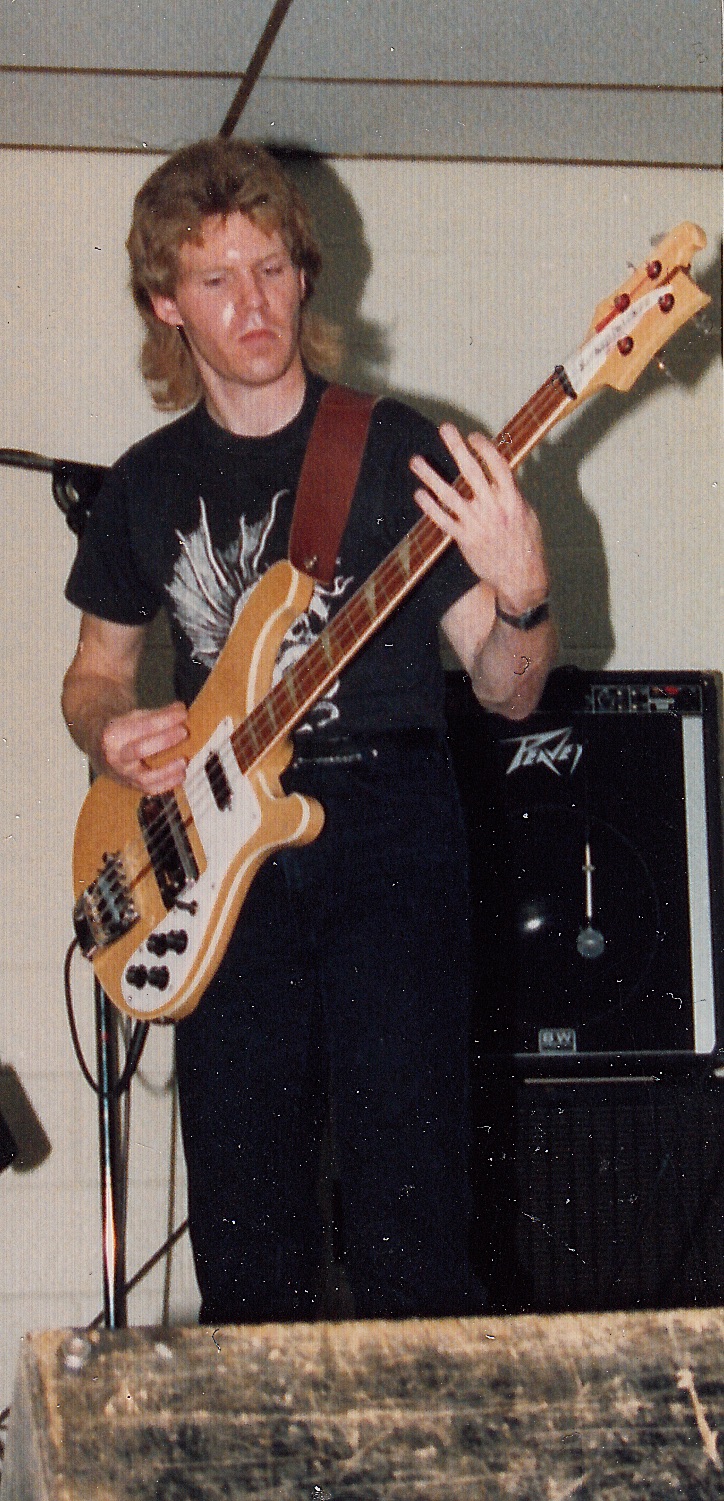
I'm "on the spectrum," which, in my case, manifests as not being very comfortable, when people give me attention. That's why I like working on "infrastructure" stuff (and also why I used to be a bass player[0]).
Increased security for "unapproved" leaders of a state. Allies will help out of fear instead of common goals. Resentment among allies. Appeasement until counter control is effective


reply