Lots of info there about my in-development game, Botnet of Ares, but also some older blog posts about technical topics or other things I found interesting.
While I'm a bit too young to have used one in school, my dad did give me his slide rule from when he was a student. It's one of my most prized possessions, if only to show how far humanity has come in terms of computing devices.
My mother (who ran a biochemistry lab) had a longish one--extra digit of precision I guess. Unfortunately my anti-packrat dad must have chucked it in some move or another. In addition to some cheap student stuff, I think I still have a couple of "normal" professional slide rules but they're not in very good shape if serviceable.
Ham radio is well worth getting into if you come from a software background but want to get more hands-on with embedded electronics. Radios are ubiquitous in modern technology, and getting a deeper understanding of how they work can have surprising career benefits too!
The RF fundamentals stay the same, but the gulf between ham radio and modern RF comms is truly vast.
Those TDM'd bands 40MHz wide, with digital data and modulation past the limits of sanity, and the entire RF system being integrated into one die somehow? Oh boy.
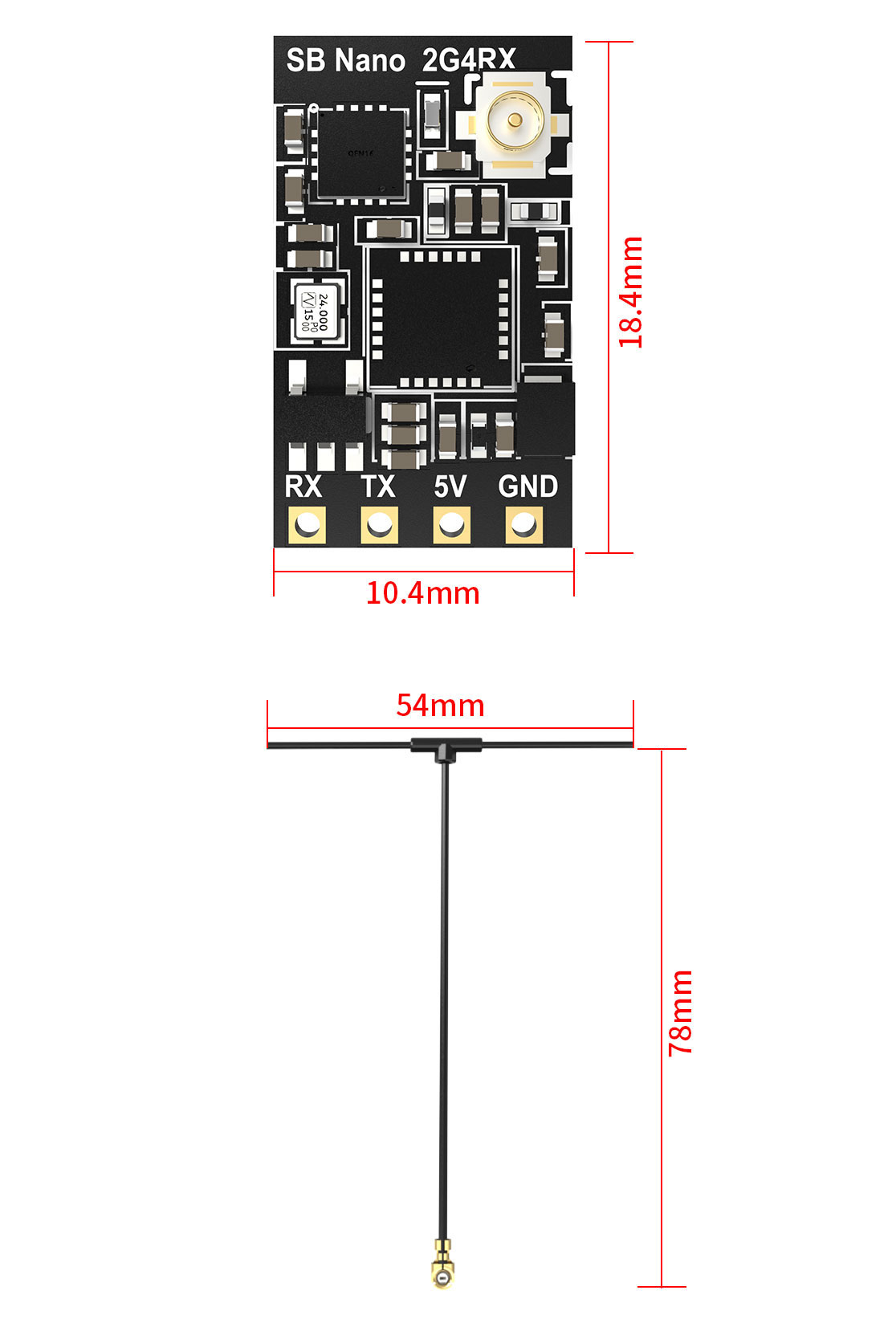
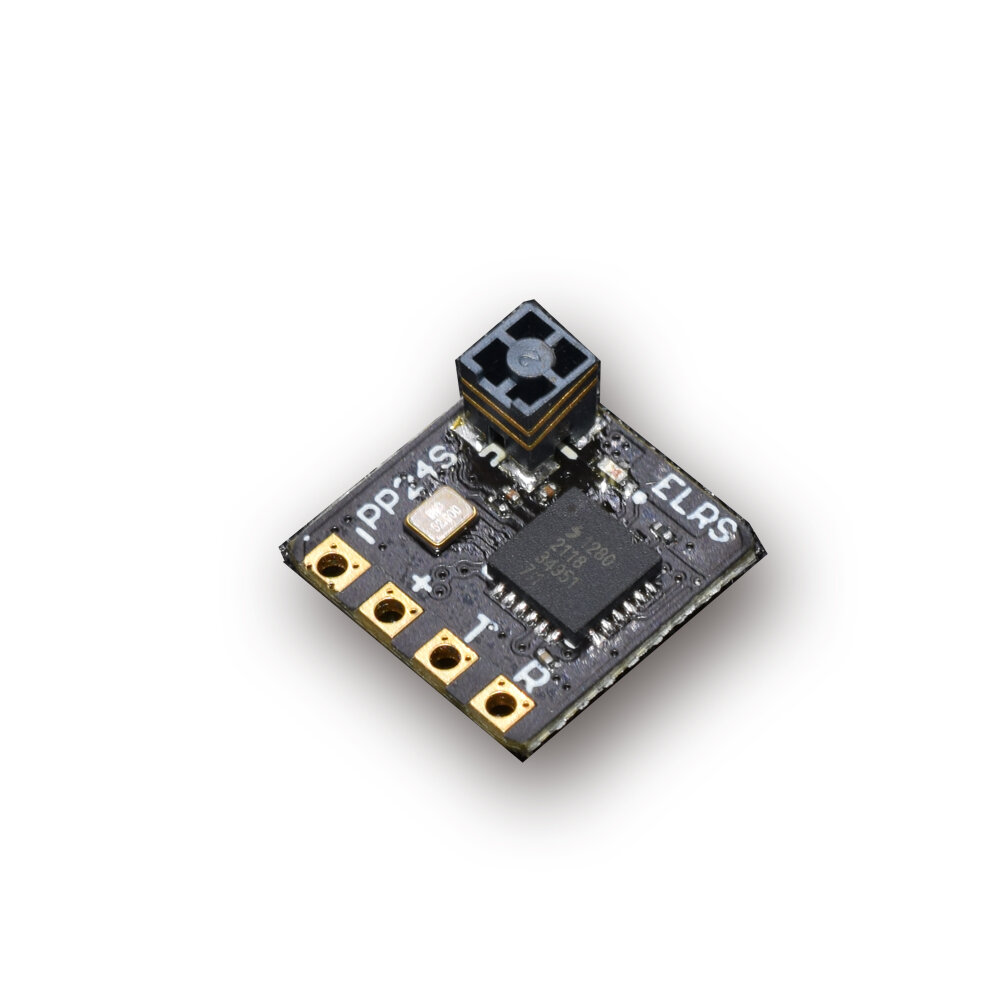
What really blows me away is the range that you can achieve with almost no power on tiny little antennas. For instance, ELRS uses a transmitter/receiver that is less than a gram, that can keep a link with a drone alive across 30 km or even more. And the antenna is so small you might toss it away with the packaging if you're not paying attention.
Wow, that's an even better example. I already have a hard time finding the radio sometimes, and need to put on my glasses, with that one you need tweezers to mount it :)
I ran into your tuning tips page the other day by way of a random search!
I'm having a devilish time tuning a drone using Inav, I've read through a mountain of documentation and tried a whole pile of things but so far it has not led to a breakthrough, just gradually increasing insight. Oh well, better to keep plugging away at it :)
I used to follow the balloon projects that hams would launch. A mylar balloon with a tiny 50 milliwatt transmitter and GPS, solar powered on the 10Mhz band tracked thousands of miles away.
> the gulf between ham radio and modern RF comms is truly vast
Especially if you consider modern cellular radios. Your phone has a completely separate powerful computer just for handling the radio (we still call this a modem for some reason), with a large software stack running.
As for modulation, starting with LTE and turbo coding, we are now near the maximum theoretical channel capacity (Shannon limit), which is mind-blowing.
Learning the basics of radio is still worth the effort (and great fun!), but the gap is indeed huge.
I don't think most people really understand the compute complexity required for LTE and 5G terminals. It's telling that pretty much every discrete-ish full-speed LTE or 5G modem I've lain eyes upon is actually an embedded SBC running its own OS, with attendant power requirements.
The companies do that because by far the largest market for LTE/5G modems is smartphones.
They could make a more cut-down modem chip, but why would they? They already make hundreds of millions on smartphone SoCs. Just rebadge that silicon as modem ICs, no one cares that an LTE stick runs full Android.
When I flip through the ham radio outlet catalog and see what people pay for a bog standard class A amplifier I realize how I am in the wrong line of work.
The coolest modern ham stuff is happening on SDRs like hackRF.
> Radios are ubiquitous in modern technology, and getting a deeper understanding of how they work can have surprising career benefits too!
Indeed.
The problem with many modern ham radios of any sufficiently complex feature set - especially when it comes to cheap hackable radios or digital radios - is that a lot of the functionality is hidden away in blackbox ASIC hardware blocks that have no public datasheets (e.g. BK4819 powering Quansheng's radios, Si4732, or for anything DMR, the AMBE-2020 vocoder).
It's truly a miracle what the hacker community has gotten out particularly out of the Quansheng chipset.
I've been studying for my amateur radio license recently, and this article is a great introduction to the basics.
But really, if you want to get your hands dirty with some practical electronics, and also want to be able to communicate without relying much on nearby infrastructure, amateur radio is a great hobby.
Do yourself a favor and study for both your technician and general at the same time (I’m assuming you live in the US). HF is exponentially more fun than just VHF/UHF.
The US ham test question pools are fully public. Your test will be a mixture of questions from the pool. HamStudy basically lets you churn the question pool, and then will offer explainer text / references to back up each question and correct answer.
I went on a vacation and used their phone app any time I was standing in a line. You can set it to just keep spinning through the questions, with a bias towards ones you're getting wrong.
You need to get 37+ correct to pass. Another way to think of that is you can get up to 13 wrong and still pass.
Within each category there are subcategories. "Antennas and Transmission Lines" for example has 8 subcategories. The 8 questions in "Antennas and Transmission Lines" are one from each of those subcategories. The question pools for these subcategories each have 10-14 questions.
If you compare to the closest corresponding categories/subcategories from the General and Technician exam you'll probably find that there are a few cases.
1. The Extra is just more of the same. It's not harder per se. "Commission Rules" for example.
2. The Extra goes goes deeper and also adds new material that is more advanced.
3. The Extra is in new territory.
If you get to the point where the Technician and General are going to no problem, then you will probably have no trouble getting to the point where case #1 is also no problem, and case #2 is also well in hand. It is #3 where you might have trouble.
But remember that you can get 13 wrong and still pass!
Pick say 10 subcategories that are in case #3 that look like they would be the hardest to get good at and just write them off.
For example in "Antennas and Transmission Lines" you might decide that the "Smith chart" subcategory, which has a pool of 14 questions, would take a lot of time to get good at. So skip it. That's 14 less potential questions you have to be prepared to answer, leaving more time to study for things in class #2 and the class #3 things that look most doable.
It doesn't cost extra to take the Extra test at the same session that you take the Technician and General tests, and there is no penalty for failing, so might as well go for it.
Huh, I never heard that one. Extra gets you more frequency privileges (nice not having to worry so much about band edges) but IMO the real benefit is being able to enjoy reciprocal operating under CEPT when traveling abroad.
Only the entry level license (Technician in the US, covering UHF/VHF) is substantially different from the German one, and it's also much more restricted. Germany in general is a much better country for radio, especially if you wanted to ever do high power broadcasting.
I think the one perk to the US is that the FCC has basically stopped caring about all but the most important frequencies. This makes HF particularly fun, since HF pirate radios are often the best listening stations in the entire RF spectrum. I have no idea what that's like in Germany, but I would imagine given the general ordnung culture and veneration of rules, German hams are much less tolerant of flagrantly unauthorized broadcast stations and your regulatory bodies are more proactive in shutting them down.
I'm working on Botnet of Ares, a hacking simulator game for PC [0]. It's an homage to classics such as Uplink and Hacknet, and also a commentary on the state of the IoT security industry.
Recently I've managed to port the game onto a real-world cyberdeck, the uConsole. [1]
Thanks for the interest! I'll be handling the music myself, I'm a producer & multi-instrumentalist and two tracks for the game have already been composed.
I too struggle with procrastination. I have a big personal project that is nearing completion & very important to me, but also turning into a bit of a slog. However, because I'm procrastinating working on said project, I managed to do many other things that are also important to me, such as writing more & sharpening some skills.


I've submitted Botnet of Ares [0], my hacking simulator.
[0] https://store.steampowered.com/app/3627290/Botnet_of_Ares/